The village's story
The tree on the hill
A story the villagers tell.
Before there was a village, there was a tree. It stood on a green hill. It was so old that nobody remembered it being small.
Its roots went down and down, to three deep wells. One well held every word ever written. One held every number ever counted. And one held something harder to name: the knack of trying again.
The tree drank from all three. But a tree cannot keep what it drinks. So it gave it all away. Its leaves rustled with stories. Its bark was ridged like a sum. And when the wind blew, the whole tree seemed to say: try once more.
A baker came first. Then Brom, who wanted to make a thing that would ring. Then Wren, who measured everything twice. When there were enough houses, the Mayor built this hall and started a book. Not a book of marks. A book of what each villager could do.
Nobody could say the tree's long old name. So the children called it Yggy. The village took the name too.
That is the story. Here is what is true: a parent built this village at home for two children, and all of it is newer than the autumn of 2026.
1
The true story
Built at a kitchen table
What actually happened, with the dates.
Yggy's Village began in September 2026 with a problem most families know. Two children, a 1st grader and a 5th grader, needed practice at home: reading for one, spelling for the other. Their parent looked at the apps. Most wanted an account for the child, a subscription that renewed by itself, and a long privacy policy that boiled down to "we keep what your child does, and we use it."
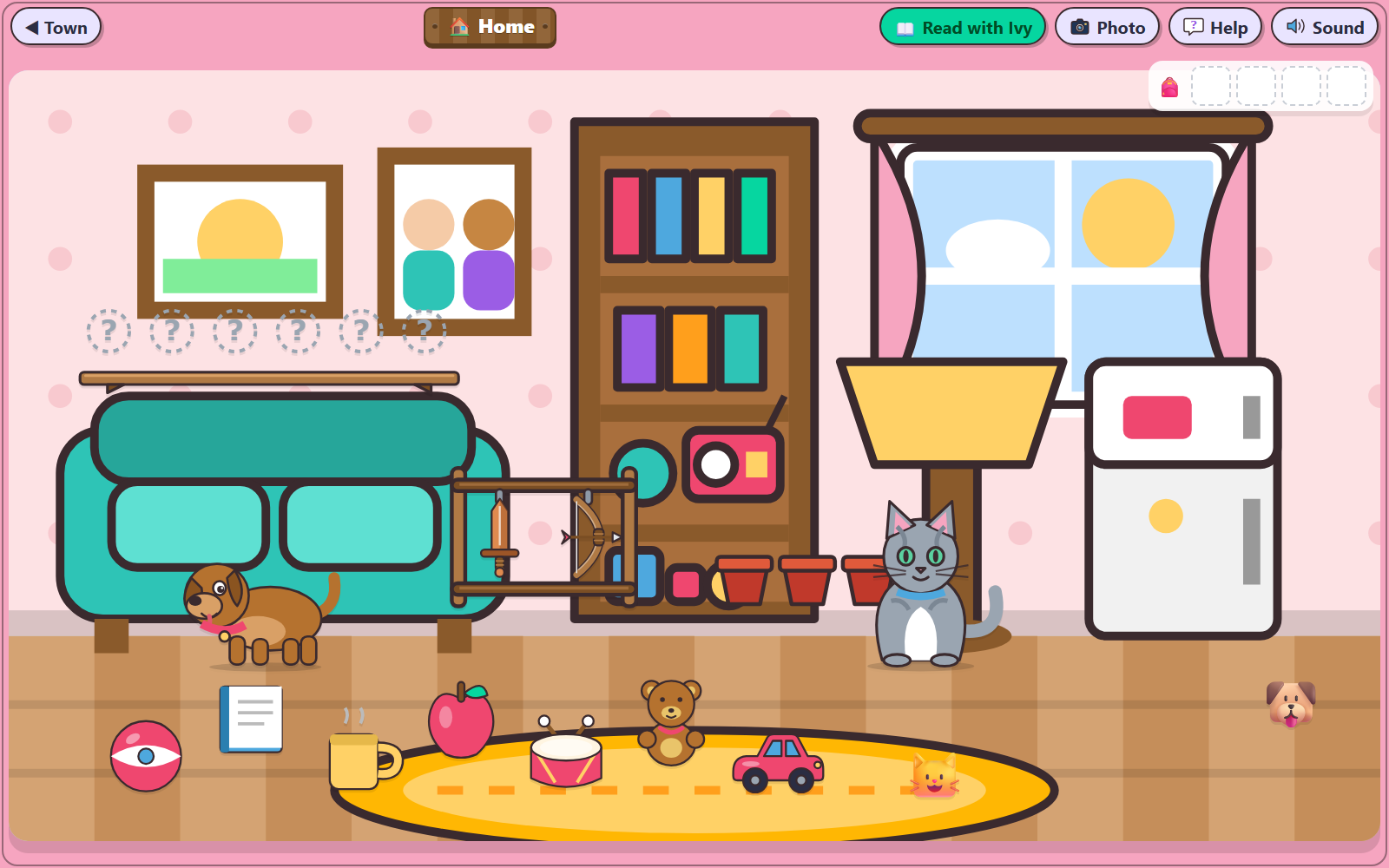
So the parent built something else. The first version was one file that ran offline on the family tablet: short lessons, hands-on practice, no internet, no login, and a check-up that started below each child's grade so nobody began with a wall of wrong answers. The children tried it. Call them Leo and Ivy; those are not their names. They did the questions, and then they asked for something to do between the questions.
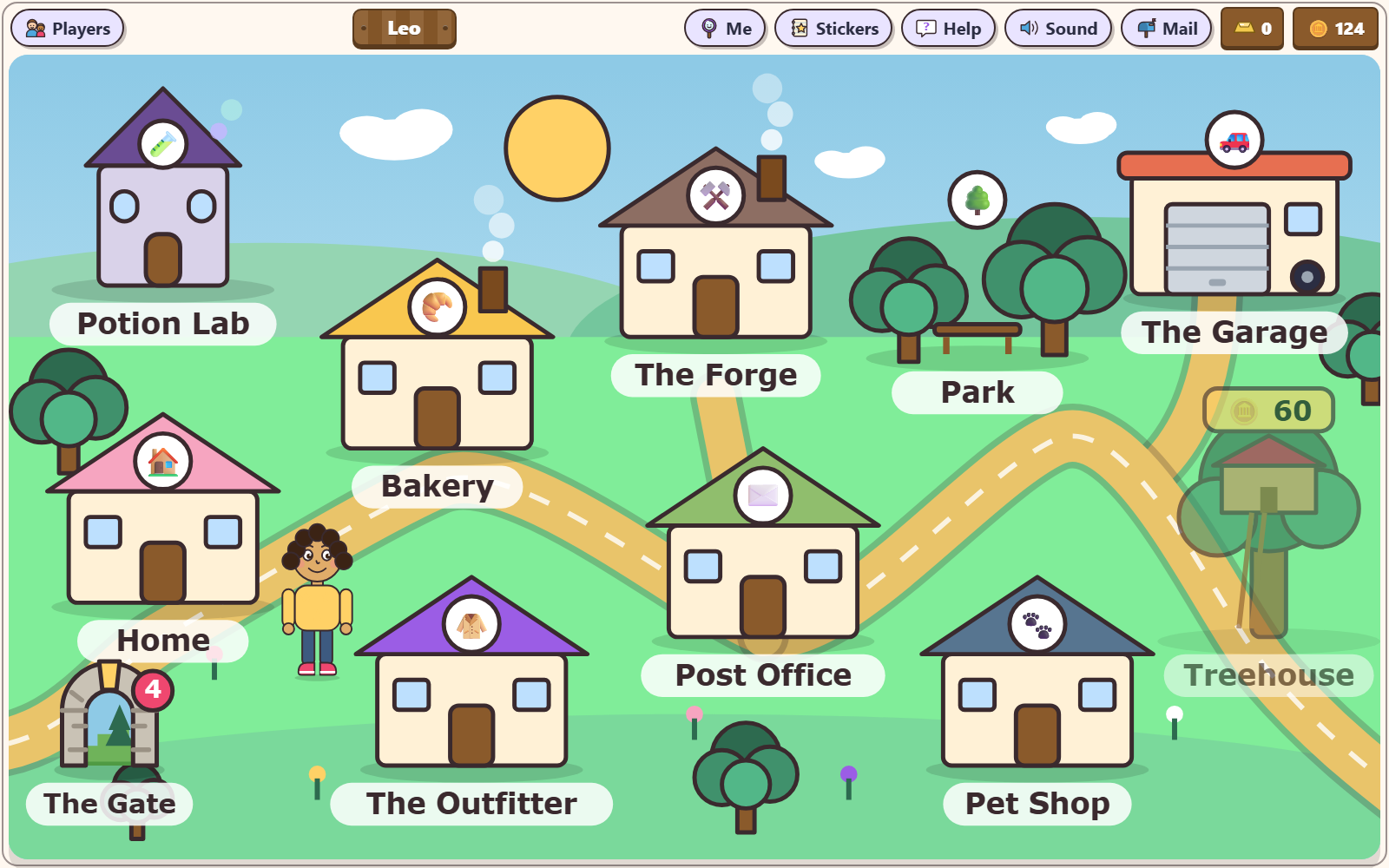
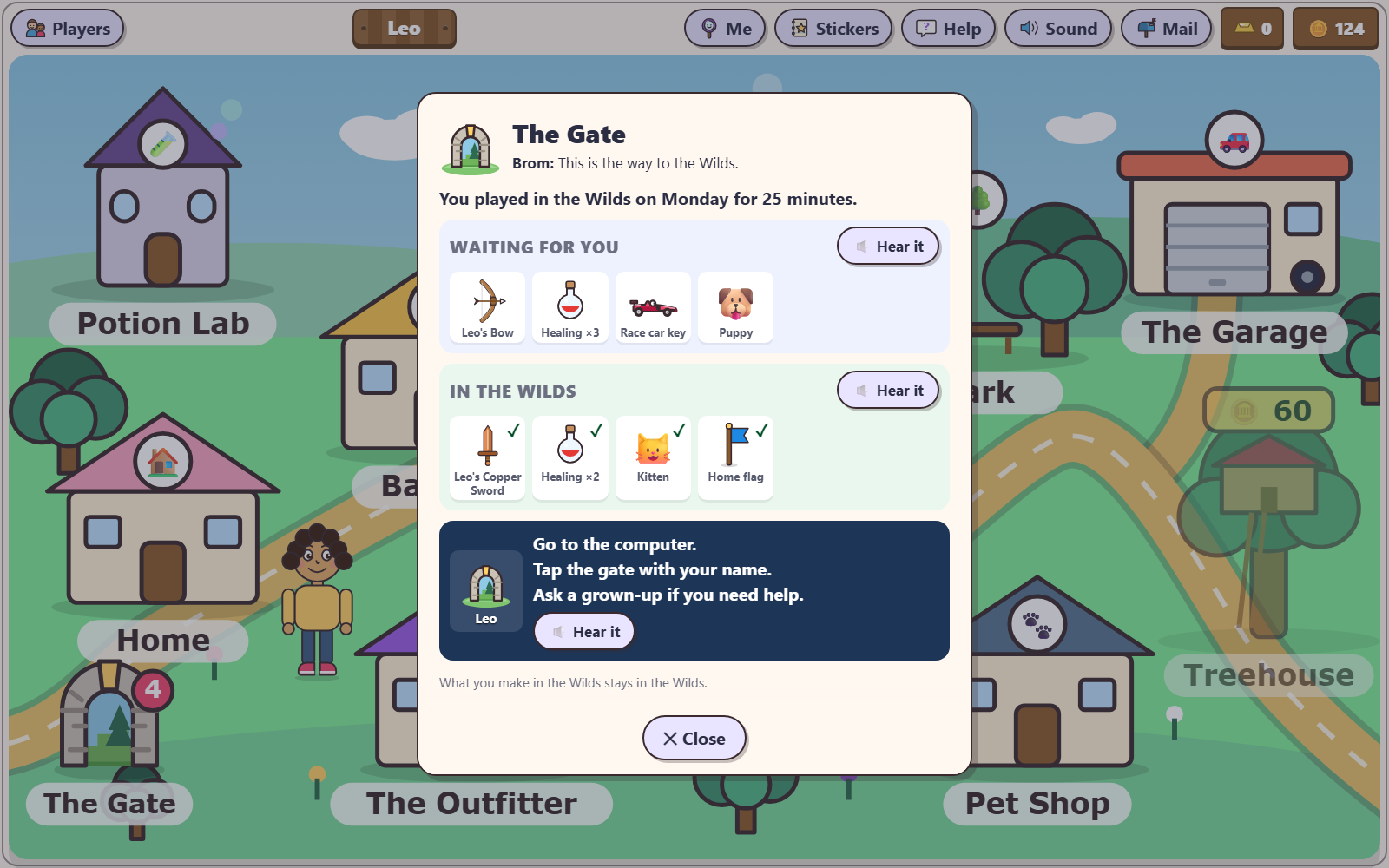
In October it became a town. A bakery, a pet shop, a post office, a forge, a potion lab, a garage, a park, a treehouse. The questions moved into the town's jobs: the baker needs a word spelled, the potion maker needs something measured. Nobody has to answer one until they walk into a place and say yes. Coins came next, and pets and hats and cars to spend them on, and a Gate at the edge of the map to an open world where what the town earns is waiting.
The rules did not change when the town got bigger. Everything a child does is saved on the family's own iPad and nowhere else. There are no accounts, no ads, and nothing for sale inside the town. A grown-up can download the whole record as one file, or delete it. The report is written in sentences, says what is stuck and why, and never gives a score or a rank. Those rules were there before the first house was drawn, and they are the reason the village is built the way it is.
The name came last, in late October. The parent wanted a word for a tree with deep roots and many branches, and settled on Yggy, a nickname for Yggdrasil, the world tree of the old Norse stories. Roots first, then branches. Nothing grows from the top down.
The village is still young. A few families will try it first, early in 2027, and what they tell us is what gets built next. Yggy's Village does not promise to raise a grade or a score. It promises to show you what was practised.
2