A town, not a worksheet.
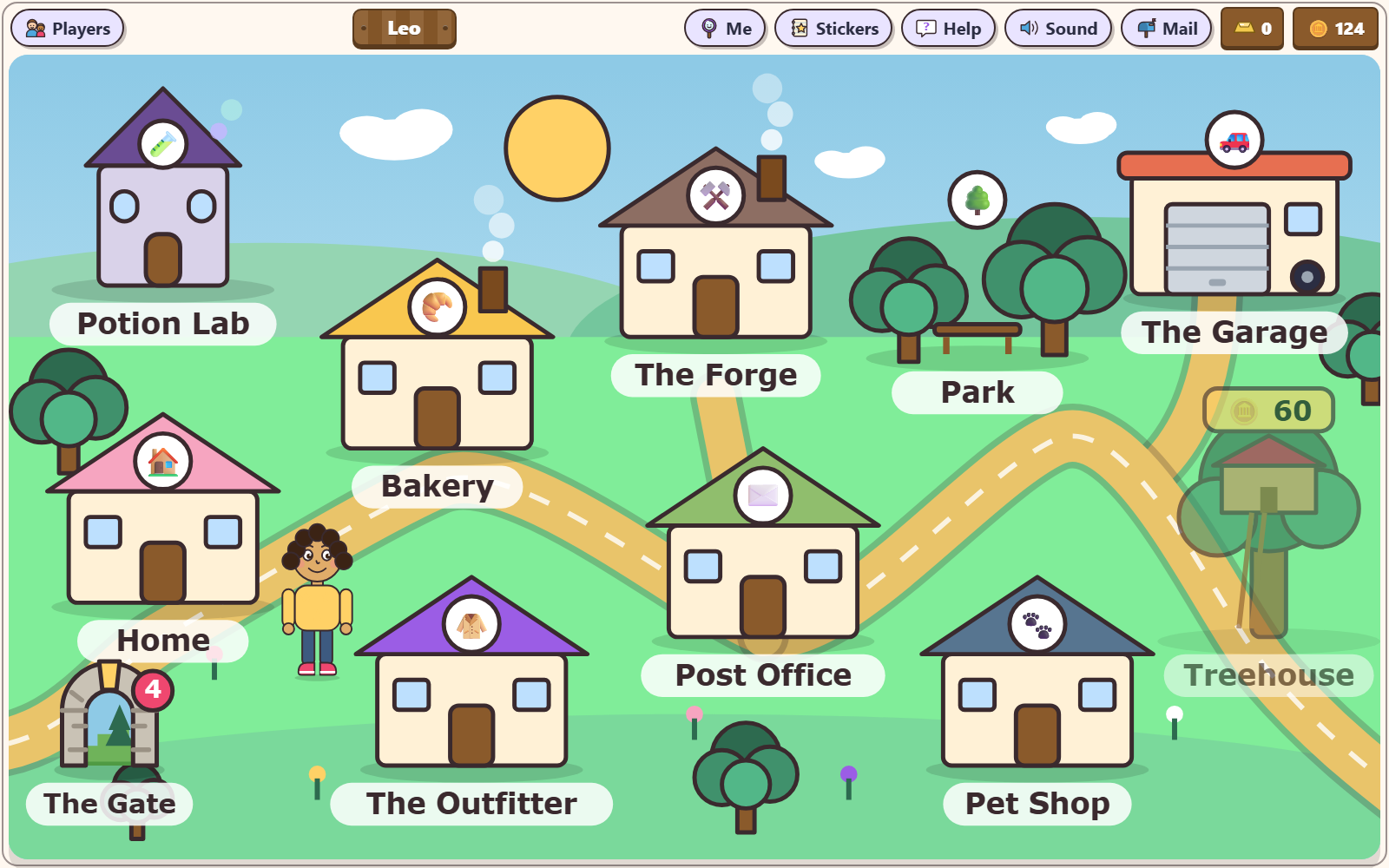
Your child opens Yggy's Village and lands on a map: a bakery, a pet shop, a post office, a forge, a potion lab, a garage, a park and a treehouse. Every character and prop can be picked up and moved. Nothing asks for an answer until your child walks in and says yes.
The town
The town is free play. Children drag characters around rooms, bake, garden, dress up, take photos for a scrapbook, keep pets and ride the bus. There is no score and no clock on free play. A grown-up can set a turn length, and the town says when it is time to stop.
Jobs: three short tasks
Each place has a keeper who offers a job: three short tasks. A job in the bakery might be spelling, in the library reading, in the lab math.
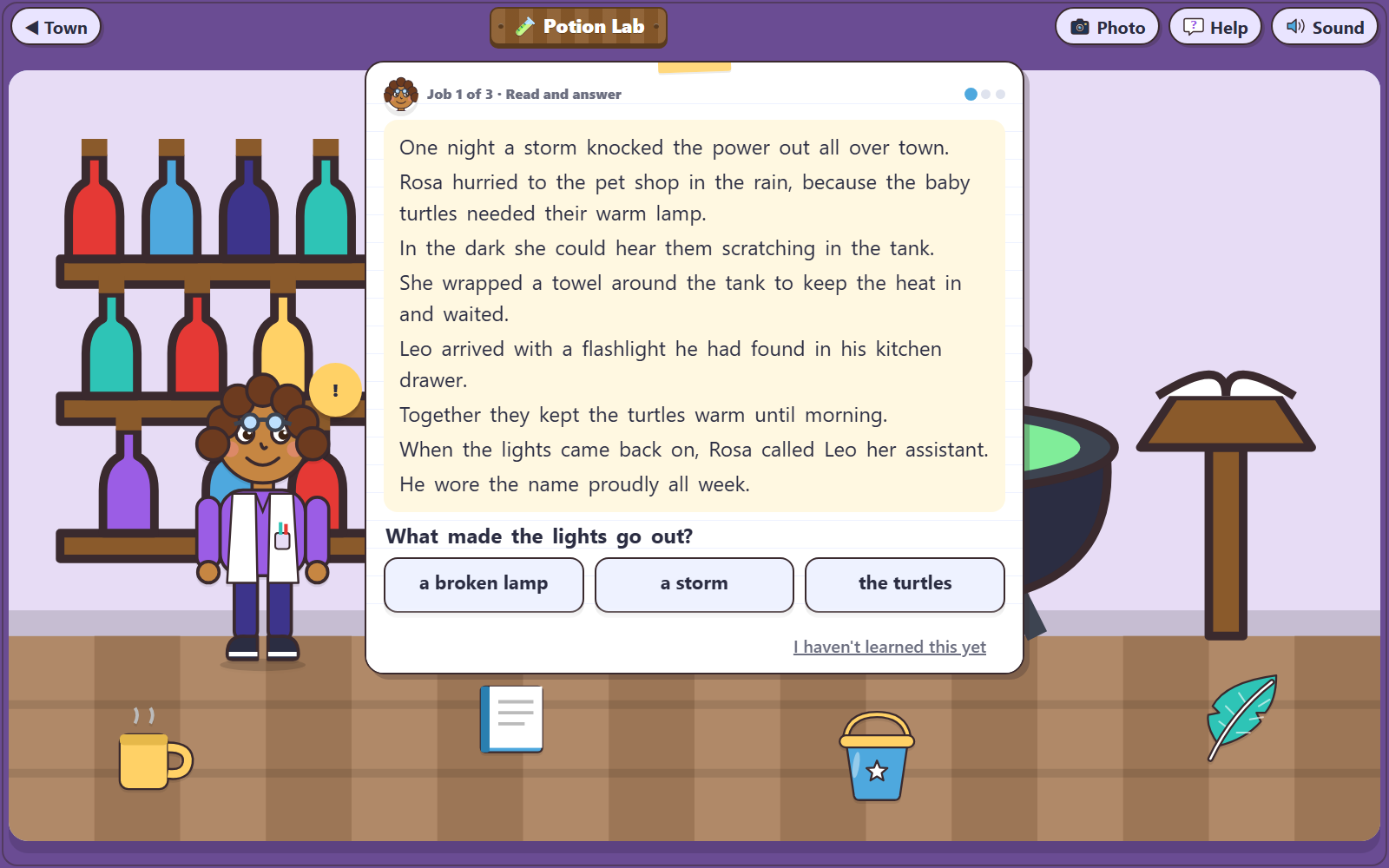
- A worked example first. Before the first question, the town shows one problem done step by step, the same way the questions will go.
- Tapped, not typed. Answers are big choices, tiles to drag or pictures to tap. Typing is off until a grown-up turns it on.
- Help after a miss. A wrong answer brings the same task back with help: a picture, a hint or the story read aloud. The report tells "not yet" from "can do it with help".
- "I haven't learned this yet." A child can say so. It is not counted as a mistake, and the report shows it to you as a question for the teacher.
Getting better
Each skill has three levels. Three right in a row moves a skill up a level. A skill at level three with four of the last five right is mastered, and the town comes back to it a few days later to see if it stuck. Mastered skills earn a gold bar.
About once a month the Mayor sends a big job: a check-up that starts a grade below your child's and climbs while answers go well. It records which kind of help worked, so the town can offer that kind first.
The skills are written by the author and tagged with North Carolina's standards, so the report can name the skill the way a teacher would. Yggy's Village is practice. It does not replace a teacher, and it does not promise a grade.
The Town Hall
When a grown-up sends a focus session, the Town Hall glows and a letter waits on its door. Inside is the Mayor's study, with a chalkboard, a desk and a shelf of plaques, one for each topic your child has finished.
Coins, shops and pets
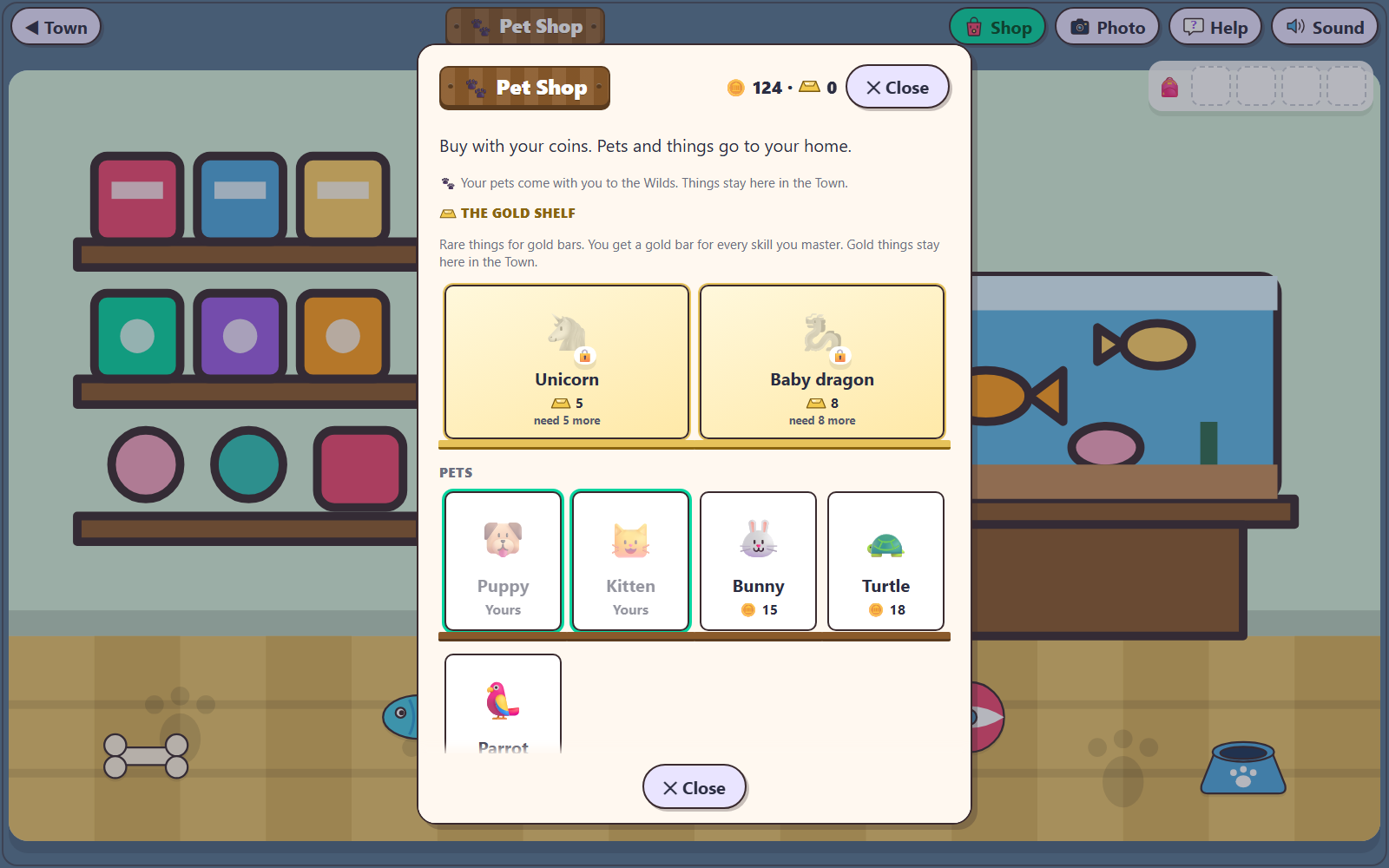
Coins come from finishing jobs, not from the score. They buy pets, hats, costumes, furniture and cars in the town's shops. Gold bars, one per mastered skill, buy the rare things on the gold shelf. Nothing is sold for real money, and coins never buy answers.
The Gate and the Wilds
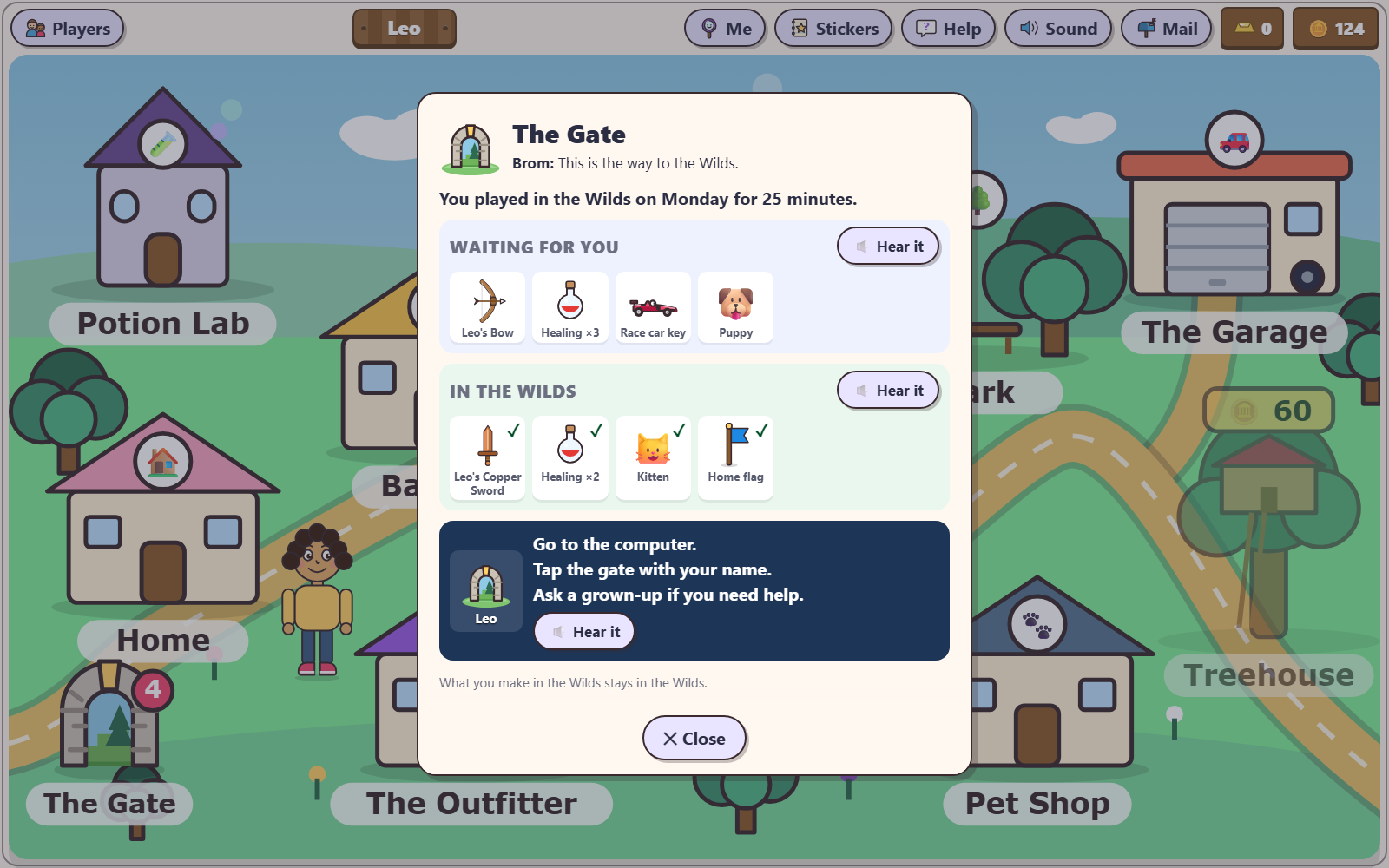
At the edge of the town is the Gate. Behind it is the Wilds, an open world where your child explores, builds and crafts. The Wilds is an add-on for families with a home computer that can stay on. It runs on that computer, on the open-source Luanti engine. What the town earns is waiting there: the car they ride, the tools they forged, the potions they brewed and their pets. The Wilds has no questions in it, and the grown-ups' page shows when they visited and for how long.
Siblings
- Read to me. A reading child asks a sibling to read three stories aloud. The listener answers, the reader earns, and both show up in the reports.
- The little mode. For a 3 or 4 year old: spoken asks, big pictures, never a red mark, and "All done" after three jobs.
- Everyone has their own town. Each child has their own character, coins, pets and report. Progress is kept on the family's iPad, so each child picks up where they left off.
See it in your home first.
Join the waitlist and we will write when a place is ready.
Join the waitlist